
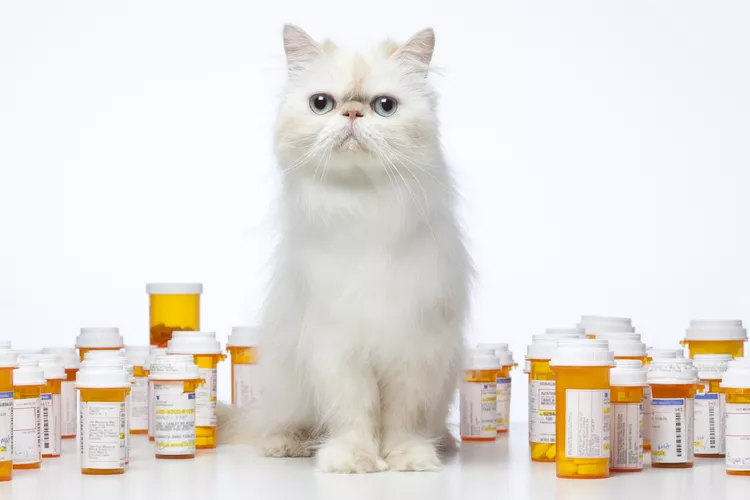
Pimobendan is a commonly prescribed heart medication. Although it has its uses in cats with heart disease, there are reasons your vet may or may not want to prescribe it for your cat. If your cat has a heart condition, it's important to know the appropriate dosage of pimobendan, when it's appropriate for your cat, and when it might do more harm than good.
What Is Pimobendan?
Pimobendan is the active ingredient in the drug also known by the brand name, Vetmedin. It is a prescription medication that was first approved by the FDA in 2007, but has quickly become one of the staple medications in treating dogs with heart disease. Currently, it is only approved by the FDA for use in dogs, but it has been shown to be beneficial in cats, and is frequently used 'off label', meaning it's used for something it wasn't originally approved for.
Pimobendan is a veterinary specific medication, so most human pharmacies don't carry it. It comes as a chewable tablet in 1.25 mg, 2.5 mg, 5 mg, and 10 mg strengths. Although there aren't many generic versions available, some compounding pharmacies can compound it into different formulations, such as smaller tablets or oral suspensions.
How Does Pimobendan Work?
Pimobendan is best classified as a positive inotrope. Positive inotropes work to increase the contractility of the heart, meaning it beats more strongly, allowing it to pump more blood with fewer beats. In addition to its positive inotropic effects, it can also widen or dilate the veins and arteries, as well as help prevent the formation of clots.
What to Treat with Pimobendan
Pimobendan, having positive inotropic characteristics, is best used to treat pets with decreased heart function.
- Congestive Heart Failure: This occurs when a cat's heart cannot pump enough blood to other parts of the body. It can be left or right sided, depending on which side of the heart has decreased function. In right sided heart failure, the heart cannot adequately pump blood to the lungs. As a result, blood begins to back up in the vessels leading to the right side of the heart, causing fluid to build up in the abdomen. In left-sided heart failure, the heart cannot adequately pump blood to the body. As a result, blood begins to back up in the vessels leading to the left side of the heart, causing fluid to build up around the lungs.
- Dilated Cardiomyopathy: This disease process is characterized by both an enlarged heart, as well as a decrease in heart function
- Mitral Valve Insufficiency: The mitral valve is the valve that separates the atrium and ventricle on the left side of the heart. Mitral valve insufficiency is a fancy way to say the valve is leaky and blood is moving back into the atrium instead of moving into the ventricle. This, too, can lead to enlargement of the left atrium and even blood backing up in the vessels leading to the left side of the heart.
- Degenerative Valve Disease: This is similar to mitral valve insufficiency, in that it means one or more valves are leaky and blood is not being circulated efficiently.
When Not to Use Pimobendan
There are heart diseases in cats, for which pimobendan is not the best medication. Generally, these are diseases in which increasing heart function may actually be a detriment.
- Hypertrophic Cardiomyopathy: As the most commonly diagnosed heart disease in cats, this condition is characterized by thickening of the heart muscle walls, which can decrease the efficiency of the heart's contractions. Cats with HCM are also at risk of forming blood clots that can be life-threatening. Treating this disease with true positive inotropes is contraindicated, as it may cause hypotension or syncope, which is a brief loss of consciousness. When pimobendan was first approved by the FDA, clinicians believed that it may put a cat with HCM at risk for these side effects because of it's positive inotropic characteristics. However, as pimobendan can also widen veins and arteries and prevent clot formation, some veterinary cardiologists believe it may prove beneficial for cats with HCM. Further research in this area is warranted.
- Hypertrophic Obstructive Cardiomyopathy: This is a variation of hypertrophic cardiomyopathy, as the thickened heart muscle wall causes an obstruction in the proper outflow of blood from the left side of the heart. Increasing the strength of the heart's contractions with the use of positive inotropes is contraindicated; this approach may actually increase the extent of the obstruction.
Pimobendan Dosage for Cats
If your vet prescribes pimobendan for your cat, it is important that you follow the dosage instructions as prescribed.
Potential Side Effects and Risks of Pimobendan
Pimobendan, when used appropriately, should likely be safe for your cat. Side effects are rare. However, possible side effects include poor appetite, diarrhea, and lethargy. Even more rarely seen are difficult breathing, weakness, and ataxia. If your cat is pregnant or lactating, or has any pre-existing conditions, let your vet know, as this is important information that would determine whether or not pimobendan is appropriate.
Pimobendan Overdose
In case of an overdose, seek veterinary attention. An overdose may cause an abnormally fast heart rate and a heart murmur. Your vet may want to treat by inducing vomiting, giving activated charcoal to absorb any pimobendan remaining in your cat's gastrointestinal (GI) tract, and administering intravenous medication for any potential hypotension. Your vet may also want to monitor your cat for any arrhythmias.