
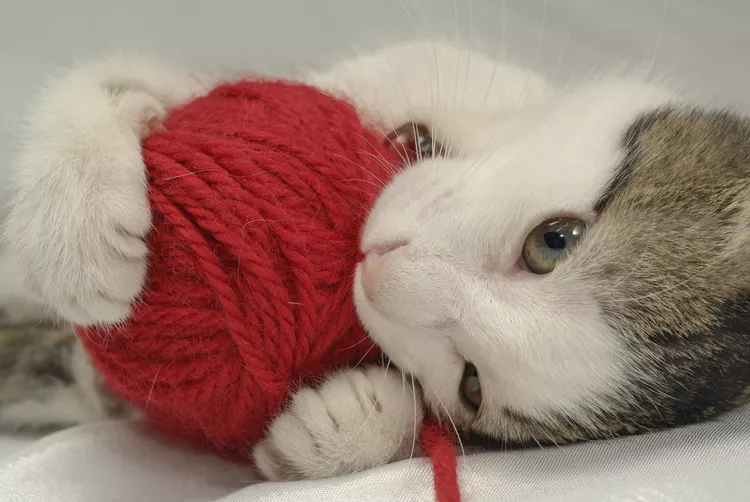
Although not all cats have the urge to suck on soft fabrics, such as wool, it can become an obsession for others. Most commonly, this behavior develops in kittens that are removed from their mother too soon. It may also develop into a habit in mature cats that are feeling anxious or stressed out and turn to sucking wool for comfort.
While it may be a harmless behavior, you certainly don't want your feline friend to swallow wool, so you may need to take action. The good news is that your cat's sucking likely has an explanation, and understanding that may lead you to solutions that can help.
Why Do Cats Suck Wool?
Genetics may play a role. Wool sucking most often occurs in kittens who are taken from their mother before they're fully weaned. Kittens should be kept with the mother cat at least until the age of 8 weeks and ideally until they're about 12 weeks old. Although they should outgrow this behavior once they're introduced to kitten food, many continue to try to suckle the mother cat for a few weeks longer.
If you adopt a kitten that's younger than 12 weeks, you become the surrogate mother. The mother's nipple is no longer available, so the kitten may find other "nipples"—kneading while sucking your earlobe, for example. This would be a natural step in the kitten's development.
Wool or other similar fabrics can easily become a cat's second choice because of its soft warmth, which is also reminiscent of the mother cat. Some cats may try to suckle other cats or even their own fur, a habit comparable to that of a human child sucking its thumb.
Even for mature cats, wool sucking may become a regular behavioral issue or a habit that periodically comes and goes. Other factors that may provoke or help sustain this behavior are:
- Breed: Oriental breeds, such as Siamese, have been identified as more likely to suck wool and other soft fabrics. It's unknown how genetics are involved, except that Siamese kittens require more time before weaning than other breeds of cats.
- Stress: Just as thumb-sucking children may grow up to be nail-biting adults during times of stress, cats that seem to have given up their wool-sucking habit may return to it when they're anxious. If this happens with your cat, examine the kinds of changes in your household that might have triggered this response.
- Environmental changes: Many cats are stressed out by change, sometimes to the point of reverting to old behaviors that may be induced by life-changing events, such as a new baby or pet or moving to a new home. Even something as simple as rearranging the furniture can have a big impact on some cats.
- Sudden aggression: If a cat in your family suddenly becomes aggressive toward another, the victim may turn to wool sucking. The sucking cat may not be able to take on the aggressive cat, so instead redirects the aggression or finds comfort in sucking.
- Death of a family member: The death of any close friend—whether human, feline, or otherwise—can be stressful to cats. In some cases, a cat may retreat to its most comforting habit during kittenhood.
How to Stop Wool Sucking
If your cat has never ingested any of the material it has suckled on, you may just wish to tolerate it. Letting it have that bit of comfort, especially if it's not obsessive or harmful or only occurs when the cat is near you, may not be worth worrying about.
On the other hand, the ingestion of fabric or other materials can cause a dangerous abdominal blockage. Pet's that wool suck may be prone to ingesting other small materials so be sure to keep small items like hair ties, floss, pieces of string away from cats. If they are ingesting inappropriate materials like blanket, it can possibly lead to the need for surgery to remove. If you suspect your cat has ingested inappropriate material, please call your vet immediately.
Some things you can do at home to help try to prevent and distract your pet from wool sucking include:
- Remove temptation: Remove all throws, blankets, and clothing that have been your cat's favorite sucking objects and lock them away. Out of sight, out of mind.
- Provide Alternative Substrate to Suck or Chew: finding alternative substrates for your cat to play or suck on instead that are large enough the cat won't ingest and also not a wool or cloth substrate can be helpful.
- Environmental Enrichment: enriching your cat's environment can be key. You can do this in a variety of ways. Developing a daily routine of engaging activities can help. Be consistent. This can be done by trying multi-day feedings in food puzzle or scheduled interactive games like laser chasing, hide and seek or wand play which may divert its attention long enough for the impulse to pass.
- Relieve stress: It's important to try to remove or correct the source of the stress first. But if your cat still seems to need suckling, try a calming pheromone such as Feliway.
- Consultation with a veterinarian: always involve your vet if you are worried about any behavior your pet is having. If you are worried about wool sucking in your cat, discuss with your veterinarian to see if an anti-anxiety or antidepressant drug might be indicated.
Loads of love, patience, and creative trial and error may be required to help your cat either desist or cut back on its wool sucking. Keep in mind that if the behavior isn't causing any harm, you may just need to put your cat's emotional comfort first and learn to accept it.