
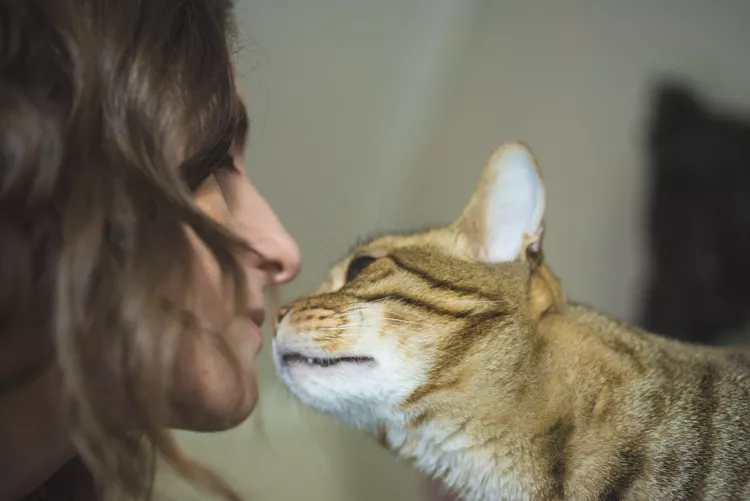
Any cat lovers know that cats, just like dogs, can have some interesting behaviors. Chin biting is definitely one of these. Truly, though, most chin bites can be more accurately described as mouthing as they rarely break the skin.
It can be alarming, though, if you are enjoying a snuggle session with your cat and they, seemingly out of the blue, start to nibble on your chin.
Reasons Why Your Cat Might Be Biting Your Chin
Although some cats may nibble on their owner's chins as a sign of play or affection, it can also sometimes be a sign that they are stressed or need space. Observing the subtleties of your cat's body language and behaviors can help you understand if it is something you need to be worrying about.
Petting-Induced Aggression
Petting-induced aggression is an interesting behavior in which a cat, who is seemingly enjoying his/her pets, suddenly lashes out with a swat or bite. Oftentimes, although it may seem like this swat or bite comes out of nowhere, there are actually subtle signs that your cat is reaching their petting limit that you might not have spotted.
Not all cats 'enjoy' being petted in the first place. The follicles in your cat's fur can be sensitive, and excessive petting can become irritating or even painful for them.
A Sign of Affection
Most people know that purring and kneading (or 'making biscuits') are both signs of a happy, content cat. These aren't the only behaviors your cat will exhibit if they love you, though.
Cats will groom one another as a sign of affection. This is a behavior known as allogrooming and can include licking and biting. If your cat starts to nibble on your chin, especially if it is preceded with a few licks, it could just be an episode of allogrooming.
Boredom or Over-stimulation
If you have been playing with your cat, they may start to nibble on your chin if they get a little too carried away. It may not be a sign of aggression, but it isn't a good idea to encourage this rough type of behavior if your cat is over-aroused.
For other cats, they may be feeling bored and this type of bitey play may be a way to stay entertained.
A Sign of Stress or Illness
If your cat is feeling stressed or unwell, it may be more prone to showing signs of aggression, including biting. They may want you to give them more space if you are crowding them or they are in pain.
In rare cases, a cat may even have a condition known as hyperesthesia, where they are extremely sensitive to touch. Cats with hyperesthesia have follicles that are even more sensitive than normal. You may notice your cat's skin crawl as you pet them along their back if they are overly sensitive to the sensation of being pet.
What To Do If Your Cat Bites Your Chin
If your cat is just being affectionate and the biting is gentle, then you may be happy to let them display their love for you in this way. If it is sore, aggressive, or just too much then there are a number of aspects to consider.
Don't Punish Your Cat
The biggest thing to remember when your cat bites your chin is to never punish them by yelling, swatting, etc. If your cat bites you from petting-induced aggression or stress this will only exacerbate the issue. If your cat bites you because they just love you so much they may get confused if they are then punished for their quirky way of showing their affection.
Give Your Cat the Space They Need
Learn to read your cat's body language and other signals that they might be giving you to tell you they don't want to be petted.
Unlike in dogs, a tail that is swishing quickly or harshly back and forth is not a sign of happiness in cats. It can actually be a sign of anger, frustration, and even overstimulation. Your cat may also go from having a nice, relaxed, slow-blink face to a tense face and may even turn their head to watch your hand as you pet them. These are all ways your cat is telling you, 'I would like you to stop petting me now'.
Provide Options for Redirection and Alternative Enrichment
Providing toys for your cat to play with can allow them to more appropriately burn off all their excitement if they are prone to overstimulation. Puzzle feeders, whether homemade or purchased from a pet supply store, can provide your cat with plenty of mental stimulation and enrichment.
Some DIY options include encouraging your cat to forage kibble or treats out of a cup, ice cube tray, or folded over toilet paper tube. Wand and feather toys and paper bags with catnip inside give your cat an appropriate outlet for their predatory instincts.
Also, if they are biting because they are overstimulated, try not to instinctively jerk back. Your amped-up cat may see this sudden and quick movement as an invitation for more play!
Ensure There is No Underlying Behavioral or Medical Condition
If your cat is normally seeking out affection and now noticeably withdraws or shows signs of aggression when you try to pet them, this could be a sign that they are feeling unwell. Keep an eye out for any other signs of illness and seek advice from your vet if the problem persists.
If your cat is exhibiting signs of stress, they may be needing more help to make them feel comfortable in their own environment. Apart from giving them the space they need, think about whether there have been other changes in their environment or routine that could have contributed to this.