
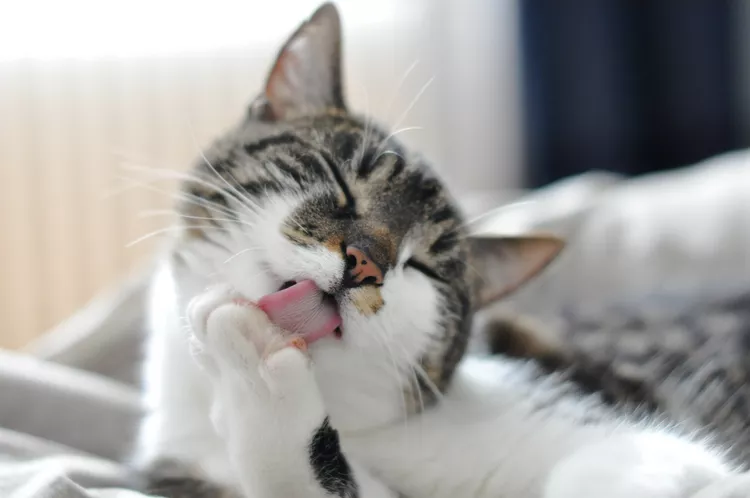
Most cats are neatniks and spend up to 50 percent of their awake time indulging in some form of cat grooming. However, grooming is learned by copy-cat behavior during kittenhood. Kittens learn to lick themselves at a very young age and are self-bathing by the time they're weaned.
Understanding Why Cats Groom
Grooming does more than keep the cat looking good. This activity maintains healthy skin by stimulating the production of sebum, an oily secretion produced by sebaceous glands at the base of each hair. Licking spreads sebum over the hair coat to lubricate and protect the fur and make it shine. It also removes loose hair and prevents mats, and removes dirt and parasites like fleas.
Grooming is also a barometer for feline health. An unthrifty appearance can signal illness in a cat, and older cats with arthritis or obese cats may be unable to pretzel themselves enough to stay pristine. Emotional or physical illnesses may also trigger excessive grooming behavior such as licking a specific area bald, either because of pain or anxiety.If your elderly or sick kitty is not grooming regularly, gently brushing its coat may help it to feel a bit better as well as preventing painful matted fur. If there are already large knots, it is best to have a professional assist you in removing them to avoid any injuries to the cat's skin.
Finally, Cats can't sweat to cool themselves and they rely on the evaporation of saliva spread on the fur through grooming to keep cool. While dogs pant to cool off, a cat that is panting (open mouth breathing) is very concerning and should be examined by a veterinarian.
How Cats Groom
Every cat has her own grooming ritual. Some lick the chin, and whiskers first, followed by each shoulder and foreleg. She'll then wash both flanks and hind legs, the genitals, and then her tail from tip to end. Not all cats groom from head to tail in one sitting however, and may break up these sessions throughout the day.
A cat uses a dampened forepaw to scrub face, head, and ears and re-dampens her paw by licking after every few swipes. She'll switch paws depending on which side she's washing.
Next, she may scratch with rear claws to clean and groom the neck and ears. She nibbles on the rear claws to keep them groomed, and both nibbles and claws an object to file her front claws into shape.
A cat's tongue has numerous spines, or papillae, that make the tongue's surface rough. You may notice this when a cat licks your skin and it feels like sandpaper. These papillae help grab onto the fur and comb through it, making grooming even more efficient.
Mutual Grooming
Mutual grooming expresses the friendly relationship between cats. It also helps cats get grooming attention to hard-to-reach areas of the body, usually the back of the head and neck regions.
However, mutual grooming is more of a social activity than a hygienic one. Grooming another cat expresses comfort, companionship, and even love. Cats that groom an owner's hair, lick your arm and accept the owner's petting actually are engaging in mutual grooming that expresses trust and affection. You are kitty-blessed!
Displacement Grooming
Cats also use grooming to make themselves feel better emotionally. Behaviors that seem inappropriate to the situation but are self-soothing are termed "displacement" behaviors. Cats use grooming in this function more than any other behavior. Your kitty may suddenly groom herself when feeling fearful, to relieve tension, or when uncertain how to react to a situation.
For example, a cat faced with an aggressive animal may (instead of running) suddenly begin frantically grooming. Or perhaps your cat misjudges a leap and falls and then begins to furiously groom as though embarrassed. In this case, grooming serves as a self-calming (kitty massage) mechanism.
Animal behaviorists believe self-grooming as a displacement behavior helps the cat deal with conflict. Perhaps the touch-sensation has a direct effect on brain chemistry or neurologic impulses that make the distressed cat feel better. In other words, self-grooming may be self-soothing. Or maybe it's just an unconscious way for the cat to distract herself, the way some people bite their nails to relieve tension.
Some displacement grooming is perfectly normal for cats. But if your cat becomes obsessive about grooming so that it interferes with other normal behavior or causes physical harm (hair loss or skin injury, for example), seek a veterinarian's advice.