
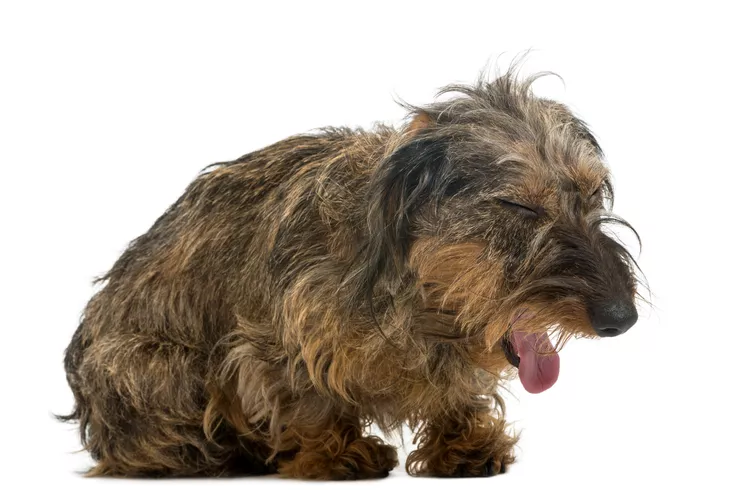
A choking dog can be very scary for a pet owner. If a person is choking, they may be unable to talk, but most people know the universal sign for choking and will wrap their hands around their neck to indicate they need help. Dogs, on the other hand, are obviously unable to give the same type of signal, but that doesn't mean they don't need help if they aren't able to breathe. Knowing what to watch for and, more importantly, what to do if your dog is choking can be life-saving skills—read on for our guide.
Causes of Choking in Dogs
When a person or animal is choking, their airway is obstructed. In people, this most often occurs when a piece of food goes down the trachea instead of the esophagus or when something gets caught in the throat and obstructs the trachea. In dogs, food can cause choking, but so can rawhide chews, toys, and other small objects in your home.
Normally, when a dog swallows something it goes down the esophagus and into the stomach. When a dog chokes, the item that was swallowed goes down or obstructs the trachea, which leads to the lungs. The trachea is for breathing and the esophagus is for eating, so if food or another item goes down the wrong tube, choking results.
Signs Your Dog is Choking
There are several serious signs that may indicate your dog is choking. Coughing or hacking is usually the first sign if they were in the middle of eating or chewing on something.
Coughing may be followed up with attempts to take large breaths without the chest rising and falling. Your dog may paw at its mouth, rub its face on the ground, gag, retch, or wheeze when trying to breathe.
If your dog is unable to get air past the item in its trachea, it will collapse or fall over and become unconscious due to being unable to breathe. The normally bright pink gums will pale and turn white or blueish in color the longer your dog is unable to breathe due to the lack of oxygen.
Without prompt resuscitation and removal of the item from the airway, death will unfortunately occur.
What to Do If Your Dog Is Choking
There are a few steps you should take if your dog is choking.
- First try to get your dog's attention by calling their name. If the coughing stops and your dog appears to be breathing and swallowing normally, they may not be choking or they could have dislodged the item already.
- If your dog is unable to breathe, you'll want to try and dislodge the item from the opening of the airway. If you are able to do this with your hand or finger without getting hurt, take a quick swipe deep in the back of your dog's throat. Be aware that the larynx (voice box) can be felt as a firm structure in the lower center of your dog's throat, and should not be pulled on.
- To perform the Heimlich Maneuver for a dog, you first have to stand your dog up on its hind legs, with its back against your stomach. Wrap your arms around your dog's abdomen just below the ribs and push your fist up into the abdomen and towards the ribs. This forces the diaphragm to compress the lungs and push air out of the trachea in an attempt to dislodge whatever is stuck. If your dog is too big for you to stand up like this, lay them on their side and perform the maneuver that way.
- Check your dog's mouth for the dislodged item by sweeping your fingers in the back of their mouth.
- Repeat the steps until the item is dislodged.
Sometimes a blockage can cause choking that isn't enough to completely prevent your dog from breathing. If the item moves it could suddenly cause severe respiratory issues. In these cases, if you are unable to successfully dislodge the item yourself and the choking is continuing, you should get your dog to the vet as a matter of urgency.
Prevention
Items that are small enough to be swallowed by your dog should never be left accessible to them. The size of the item will vary depending on how large your dog is, but be aware of things like small pieces of chew toys and bones, treats that are a little too big for a tiny dog, cat toys, and various household items that your dog may want to put in their mouth.
Finally, if your dog eats too quickly and is prone to choking, use a raised surface and a cookie sheet or special slow feeder bowl designed to spread the food out. Large rocks or other items that are too big to be swallowed can also be placed in your dog's food dish to force them to eat slower due to having to move around the items.