
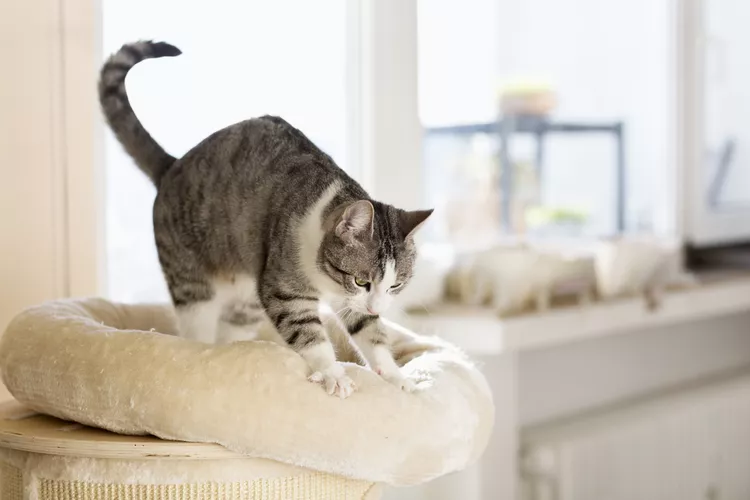
Kneading, or “making biscuits,” is a common kitten behavior that persists into adulthood. Cats may often knead soft household items, such as pillows and blankets, or they may prefer kneading the chest, stomach area, and arms and legs of their human companions. While there are several theories that could explain this behavior, many cat companions interpret kneading as a sign of affection and emotional attachment. This may not be too far off the mark, given that kneading harkens back to the deep-seated instinctual behavior that occurs between mother cats and their kittens.
More than 58 million cats live in United States households, and having a close, loving relationship with a cat benefits both the human and the feline involved. Cat behavior can also be puzzling to humans. (It's not as easy to interpret as the behavior of dogs, which has been extensively studied and documented in scientific literature.) Cats are misconceived as aloof and independent, but they actually operate naturally within more flexible social structures. These social structures encompass being communal and strongly independent at different times, depending on their life experiences and current environment.
Studies of cat behavior show they form strong attachments to their human caregivers. In one study, 65% of cats formed secure bonds with their human caregivers, a rate that’s on par with similar studies in dogs and human infants. Kneading may be one distinctive behavior cats have adapted from their communication repertoire to demonstrate or reinforce this bond with “their” people.
What is Kneading in Cats?
Kneading is the rhythmic movement of a cat’s front paws where they flex and press their toes and pads back and forth on a soft object, alternating from paw to paw. The action resembles the motions a baker uses when kneading bread, which results in the behavior's common nickname of “making biscuits." Kneading may also be referred to as “making muffins” or “happy paws.”
Many cats purr while kneading and may appear to be intensely focused on the task. Some cats may also rhythmically kick their back feet and twitch their pelvis while kneading. Cats knead either with their claws—inserting them into the object and then retracting them—or without.
Cats may have a favorite blanket or soft toy they routinely knead, or they may knead a variety of soft surfaces without showing a strong preference for any of them. Cats commonly knead the people they live with, often choosing a person’s stomach, chest, or legs. Cats may also knead other animals in the household, including other cats and dogs.
Why Do Cats Knead?
There are several hypotheses about why cats knead, and it’s likely that kneading serves different purposes for cats depending on their life stages, environment, and context.
Kneading is one of the first behaviors kittens demonstrate as newborns. They will knead on their mother’s abdomen to stimulate milk letdown so they can nurse. It is possible that, in domestic cats, this early behavior established in kittenhood has been carried over into cat-human caregiver relationships. Cats recognize a type of familial bond with their caregivers—even those who aren't felines.
Kneading may also be related to feelings of wellbeing and contentment in cats. Cats may knead because they feel secure and happy in their environment. Kneading can also be performed as a self-soothing behavior to make the cat feel better when stressed or anxious.
Another reason cats knead may be to mark their scent. Cats have scent glands in their paws, which release chemicals called pheromones that are important for marking their territory and sending messages to other animals. Cats release these pheromones when they perform behaviors like scratching on trees and posts, leaving their scent markers behind. The same goes for kneading. Humans can’t smell these pheromones, but other cats can.
In addition to territorial marking, kneading may be related to other behaviors handed down from cats’ wild ancestors. It may be a sign of bedding down or nesting behavior, and wild cats may have used it to pat down grass and leaves to create a comfortable bed. Today’s domestic cats may still carry out this behavior before they are ready to settle down for a nap.
Kneading may also serve an important function in keeping a cat’s claws, feet, and paw pads healthy by stretching and flexing them—similar to the way people perform regular stretching exercises to maintain physical fitness.
Unspayed female cats will lay on their sides and knead when they are going into heat, which indicates they are entering a period that's receptive to breeding.
Is Kneading Normal?
Kneading is a normal behavior in cats that is important for their health and wellbeing and is generally not a cause for concern. When a cat kneads a person, it can be a pleasant bonding experience for both and shows that the cat is comfortable and happy around that person.
Sometimes kneading can damage items like sweaters, pillows, and blankets because cats pull on the threads with their claws. If this occurs, never punish the cat or abruptly stop their kneading. Rather, gently redirect the cat to another item by slowly inserting it under their paws while taking the other item away from them. Alternatively, you can move them to a different blanket, pillow, or toy by slowly and gently moving their body onto the other item. Set aside a special blanket or towel for the cat's kneading, and put away other items you don’t want damaged when they are not being used.
When cats use their claws to knead, this can be painful to the person being kneaded. Again, the cat does not intend for this action to be harmful and should never be punished for using claws when kneading. Placing a thick blanket or other soft item between your skin and the cat can protect from discomfort or scratches when your cat is kneading. Keeping your cat’s nails trimmed or using plastic nail caps will also help prevent discomfort or injury.
In rare cases, cats may suddenly change their kneading behavior. If they're meowing in an unusual ways while kneading or exhibiting aggressive behavior toward people or other cats in the house, this can indicate a medical or behavioral problem. If your cat’s behavior changes suddenly, always consult your veterinarian to make sure there isn’t an underlying physical ailment that requires treatment. Your veterinarian can also advise you if your cat is showing any concerning behavior changes.